Winter Auto Body Damage: Salt, Sand, and Rust Risks
North Hampton, United States – March 5, 2026 / Committed Collision & Auto Body Center /
North Hampton, NH – Winter road treatments help keep New Hampshire drivers safe, but they also contribute to vehicle damage that often remains hidden until warmer months arrive. Salt, brine solutions, and sand accelerate corrosion and paint deterioration, particularly in areas beneath panels and along seams. As winter conditions subside, Committed Collision & Auto Body Center encourages vehicle owners to understand how seasonal exposure can affect long-term appearance and structural condition. This auto body shop in North Hampton, NH, can address the resulting problems.

Road Salt and Brine Create Lasting Corrosion Exposure
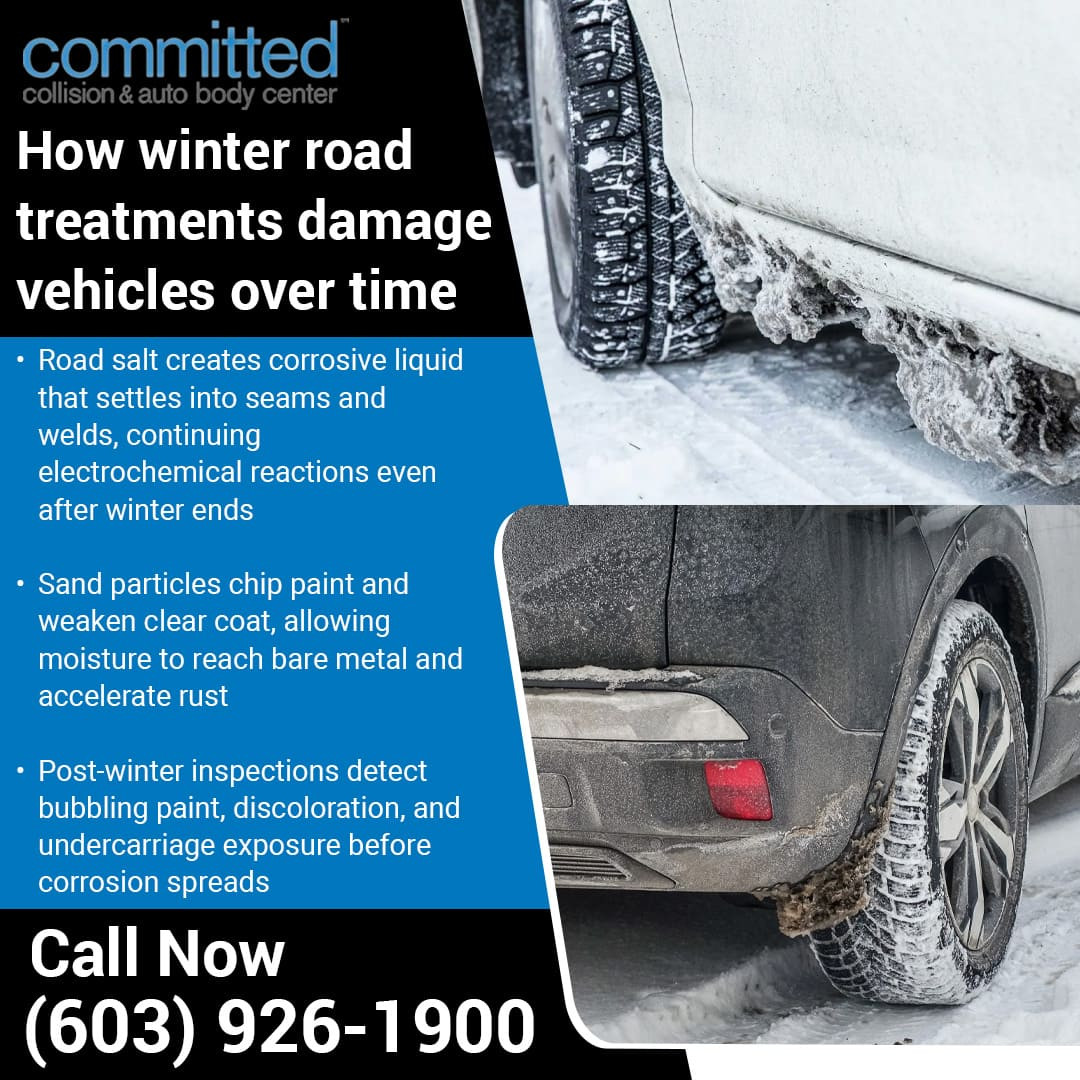
State and local agencies rely on salt and brine to reduce ice formation and improve traction. When mixed with melting snow, salt forms a corrosive liquid that clings to metal surfaces. This residue settles into seams, welds, and areas where protective coatings are thinner or damaged. Once present, the electrochemical reaction between salt, moisture, and steel continues even after winter ends.
Road salt is applied across U.S. highways each winter. Vehicles operating in cold-weather regions face repeated exposure, which explains why corrosion-related auto body repair is commonly needed in spring.
Sand and Grit Accelerate Paint Failure
Sand improves traction without chemical interaction, yet it introduces physical damage. As vehicles travel on treated roads, sand particles strike painted surfaces with force, especially along rocker panels, lower doors, and wheel openings. This repeated impact chips paint and weakens the clear coat layers.
Once paint protection is compromised, salt and moisture reach bare metal. Vehicles driven in regions that rely heavily on sand treatments often experience faster paint breakdown, increasing the likelihood of corrosion developing beneath intact paint.
Rust Often Develops Where Drivers Cannot See It
Rust rarely begins in obvious places. Oxidation frequently spreads beneath paint layers, weakening metal before surface changes appear. Wheel arches, door seams, pinch welds, and underbody surfaces face elevated risk due to constant exposure and limited drainage.
Vehicles experience higher corrosion rates when exposed to road salt. This makes post-winter inspections important for identifying early-stage damage that may not yet be visible. Committed Collision & Auto Body Center is an I-CAR Gold Class facility that performs
Paint Damage Serves as an Early Warning Sign
Paint acts as a vehicle’s primary defense against corrosion. Winter conditions weaken this barrier through chips, scratches, and freeze-thaw cycles. Moisture enters microscopic cracks in clear coat layers and expands during freezing, pushing paint away from metal surfaces.
Even small chips can allow corrosion to spread beneath surrounding paint within a single winter season. Local auto body repair specialists recommend addressing paint damage early to help keep repairs localized and prevent rust from advancing into larger sections of the vehicle.
Undercarriage Exposure Raises Structural Concerns
While surface damage draws attention, undercarriage exposure presents greater long-term risk. Salt spray from tires coats structural surfaces throughout winter driving, while debris blocks drainage channels designed to shed moisture. Trapped water creates conditions where corrosion can progress quietly over time.
Surface deterioration on subframes and mounting points may indicate deeper weakening that affects vehicle integrity. This is why inspections at a qualified auto body repair shop are often recommended once winter road treatments stop.
Modern Vehicles Are Not Immune to Winter Damage
Advances in manufacturing have improved corrosion resistance, but modern vehicles remain vulnerable. High-strength steel corrodes rapidly once protective coatings fail, and aluminum components degrade differently under salt exposure. Factory testing simulates years of use, yet real-world winter driving often exceeds laboratory conditions due to concentrated salt application and repeated temperature swings.
When Professional Inspection Becomes Important
Visible warning signs such as bubbling paint, discoloration near seams, flaking along rocker panels, rust stains near trim, or uneven panel edges may indicate moisture intrusion beneath the surface. Early attention from local auto body repair specialists allows repairs to remain straightforward rather than extensive.

Protecting Vehicles After Winter Exposure
Committed Collision & Auto Body Center provides drivers with reliable auto body repair in North Hampton, NH. They provide post-winter evaluations designed to identify paint failure, early corrosion, and structural surface exposure that casual inspections may miss. Contact them at (603) 926-1900 or info@committedcollision.com. Addressing these concerns promptly helps protect vehicle value and long-term safety.

Contact Information:
Committed Collision & Auto Body Center
203 Lafayette Road
North Hampton, NH 03862
United States
Derek Lighthall
(603) 926-1900
https://committedcollision.com/
Original Source: https://committedcollision.com/auto-body-repair/winter-auto-body-damage-salt-sand-and-rust-risks/