
Leeds, West Yorkshire Aug 5, 2026 (Issuewire.com) Every planting season, Kenyan farmers watch the price of a sack of fertilizer with the same anxiety once reserved for the rains. It’s a reasonable thing to worry about. Kenya imports the entirety of its fertilizer, which include urea, DAP, and CAN, spending roughly $376 million doing so in 2024 alone, on ships arriving from ports as far away as Russia, China and the recently turbulent Gulf. That bill rises and falls with the price of natural gas thousands of kilometres away, because ammonia-based nitrogen fertilizer cannot be made without it. When a shipping lane in the Black Sea closes or a pipeline dispute pushes gas prices up, Kenyan smallholders feel it within a season, not years.
“I have spent the past several years building biogas systems across the world through Kyoto Network, and I want to make an argument that sounds almost too simple: a meaningful share of that import bill is sitting, unused, in the cattle sheds and kitchens we already have.”
Amro Zakaria, Kyoto Network Founding Partner
The byproduct nobody prices
A biogas digester takes manure, kitchen waste or crop residue, mixes it with water, and lets microorganisms break it down in a sealed tank. Everyone focuses on what comes out of the top, the methane, for cooking or power. Almost nobody prices what comes out of the bottom: bio-slurry, a wet organic residue that retains most of the nitrogen, phosphorus and potassium that went in, in a form crops take up more easily than raw manure. We built our digesters, including the school systems we’ve installed in places like Kaptagat, chasing clean cooking fuel and reduced firewood use. It was only once we started measuring the slurry that we understood we’d been undervaluing the more important half of the output.
“We don’t need new infrastructure to close the gap between supply and demand; we largely need to convince people the gap is already closed.”
Eng. Ben Lang, Kyoto Network Kenya Partner and CEO
I want to put an actual number on this, because “biogas slurry can replace fertilizer” is the kind of claim that’s easy to state and easy to wave away as anecdotal. Take a fleet of 10,000 medium-sized, 50 cubic-metre fixed-dome digesters, a realistic size for institutional and larger community systems, not a hypothetical mega-project. Using standard design assumptions (a 40-day retention time, giving roughly 1,250 kg of slurry per digester per day) and a commonly cited nitrogen content for digested cattle slurry of about 1.5% by weight, that fleet recovers on the order of 68,000 tonnes of nitrogen a year. Converted at urea’s 46% nitrogen content, that’s a gross urea-equivalent of roughly 149,000 tonnes annually.
Nitrogen in slurry doesn’t behave exactly like nitrogen in a bag of urea; some of it is organically bound and releases to the crop over more than one season, so a more honest “effective,” first-season figure, using a conservative 40% availability assumption, is closer to 59,500 tonnes of urea-equivalent. At a representative import price of $450 a tonne, that conservative figure is still worth roughly $27 million a year. The gross figure, if we ever capture and apply all of it, is worth closer to $67 million. Even the conservative number is 78% of Kenya’s entire annual fertilizer import bill, recovered from nitrogen alone, before counting the phosphorus and potassium the same slurry carries, or the diesel and charcoal already displaced by the gas itself.
A coordination problem, not a resource problem
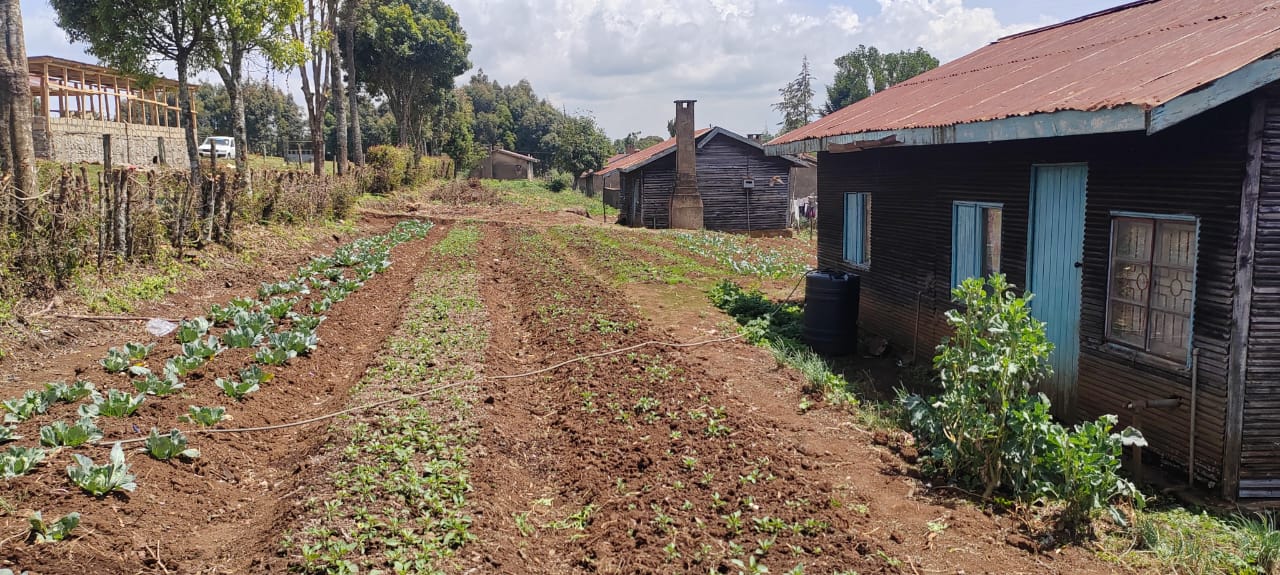
Researchers at Cornell University in the US, in a recent nutrient-recovery study, put their finger on something I recognise from the field: the barrier to using organic nutrients at scale is almost never the resource. It’s coordination, and getting the material from where it’s produced to where it’s needed, in a form cheap enough to move and confident enough to trust. In the United States, that means trucking manure hundreds of miles from livestock country to cropland. Kenya doesn’t have that problem. The cow, the compost heap, the school garden and the maize plot usually sit within a few hundred metres of one another.
What farmers actually see
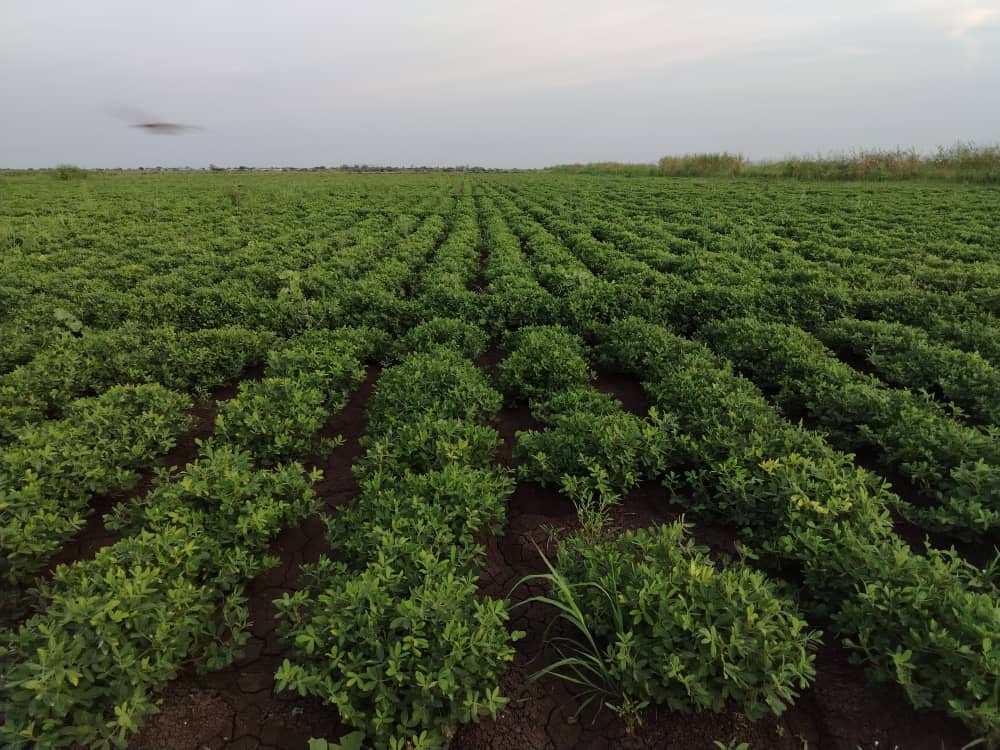
The yield case backs up the economics. Field trials across biogas programmes report maize yields up around 2025% and rice yields up closer to 30% where slurry replaced or supplemented synthetic fertilizer, alongside real savings on chemical fertilizer purchases per hectare. On our own project sites, the qualitative pattern is the same: slurry-fed plots keep producing steadily through a season rather than spiking and fading the way urea-only soil does, because the organic matter also rebuilds soil structure and water retention, something no bag of urea can do at any price.
None of this is a call to stop importing fertilizer, and I won’t pretend slurry is a perfect substitute; it needs to be dosed to the crop, and building trust in a farmer’s own waste stream as a fertilizer takes extension work, not just engineering. But at a moment when Kenya’s foreign exchange is stretched, and the price of imported nitrogen is hostage to a war and a gas market on the other side of the world, a resource this large should not be treated as an afterthought to clean cooking. It is, on its own, a fertilizer strategy and one Kenya already has the digesters, the farms and the compost heaps to run.


Source :Kyoto Network
This article was originally published by IssueWire. Read the original article here.


